Conservation Actions

What It Takes To Conserve Central Grasslands

Turning the page on grassland losses will take investment in strategic actions. JV8 has identified four voluntary types of activities that together will help reach the goal of a stabilized Central Grasslands landscape by 2044.

Protection in Action

McIntyre Ranch in Alberta encompasses more than 55,000 acres of critical prairie grassland and wetland habitat. A monumental conservation easement on the ranch is the largest such agreement in Canadian history Partners include: Government of Canada, Nature Conservancy of Canada, Ducks Unlimited Canada and the land trust community.

Restoration in Action

Two and a half million acres of grasslands in Nebraska’s Sandhills region are threatened by encroachment by trees. Partners are working with private landowners through cost-share programs to eliminate Eastern Red Cedar seed sources and establish intact grassland cores.

Enhancement in Action

The Sustainable Grazing Network is a collaboration between Bird Conservancy of the Rockies, Evaluación Integral y Restauración de Hábitat, A.C., Rio Grande JV, andnorthern Mexican landowners. The goal is to conserve and enhance wintering habitat for migratory grassland birds. The SGN currently involves 31 properties encompassing over 600,000 acres. Landowners participate voluntarily. RGJV and EIRHA, with additional support from the U.S. Fish and Wildlife Service, are measuring habitat results by implementing the Grasslands Effectiveness Monitoring protocol.

Persistence / Retention in Action

The younger generation of a 12,000-acre Montana family ranch is taking over the operation. Ranch managers are working with several NGOs to finance enhancements to improve grazing management and use monitoring data to inform decisions. The goal is to build drought resiliency and long-term persistence of intact, sustainable rangelands by supporting the next generation of land stewards.

1) Habitat Protection

JV8 aims to conserve 425,000 acres annually by maintaining large blocks of functional grasslands and habitat connectivity in key areas. Such work includes collaborating with partners to strategically maintain sustainable use of grasslands by undertaking voluntary, incentive-based conservation of real property through perpetual conservation easements, fixed-term habitat conservation leases of 30 to 40 years, or fee-title acquisition.
McIntyre Ranch
Prescribed Fire - Brush Management

2) Habitat Restoration

Reestablishing healthy habitat on lands that were intentionally converted to other uses, like growing crops, or were altered by natural disasters, is another way to stabilize Central Grasslands. JV8 will work with partners to actively restore 457,000 acres annually of grasslands encroached by woody shrubs or lost to low-productivity cropland conversion. Conservation actions toward this goal include transitioning unproductive cropland back to working grasslands, removing woody shrubs, and returning natural hydrology to altered wetlands. This work may also include re-establishing lost grasslands, re-seeding, and restoring hydrologic function and connectivity.

3) Habitat Enhancement

JV8 strives to improve management on 10.8 million acres of at-risk grasslands annually by enhancing the quality and function of grasslands. This work includes reducing the risk of conversion in degraded or damaged habitat and improving the state of existing habitat. Conservation actions include improved grazing management and investments in infrastructure (e.g., fencing and stock tanks); biological, chemical, and mechanical treatments for woody encroachment; prescribed fire; and regenerative agriculture practices.
Prescribed Fire - Brush Management

4) Habitat Persistence/Retention

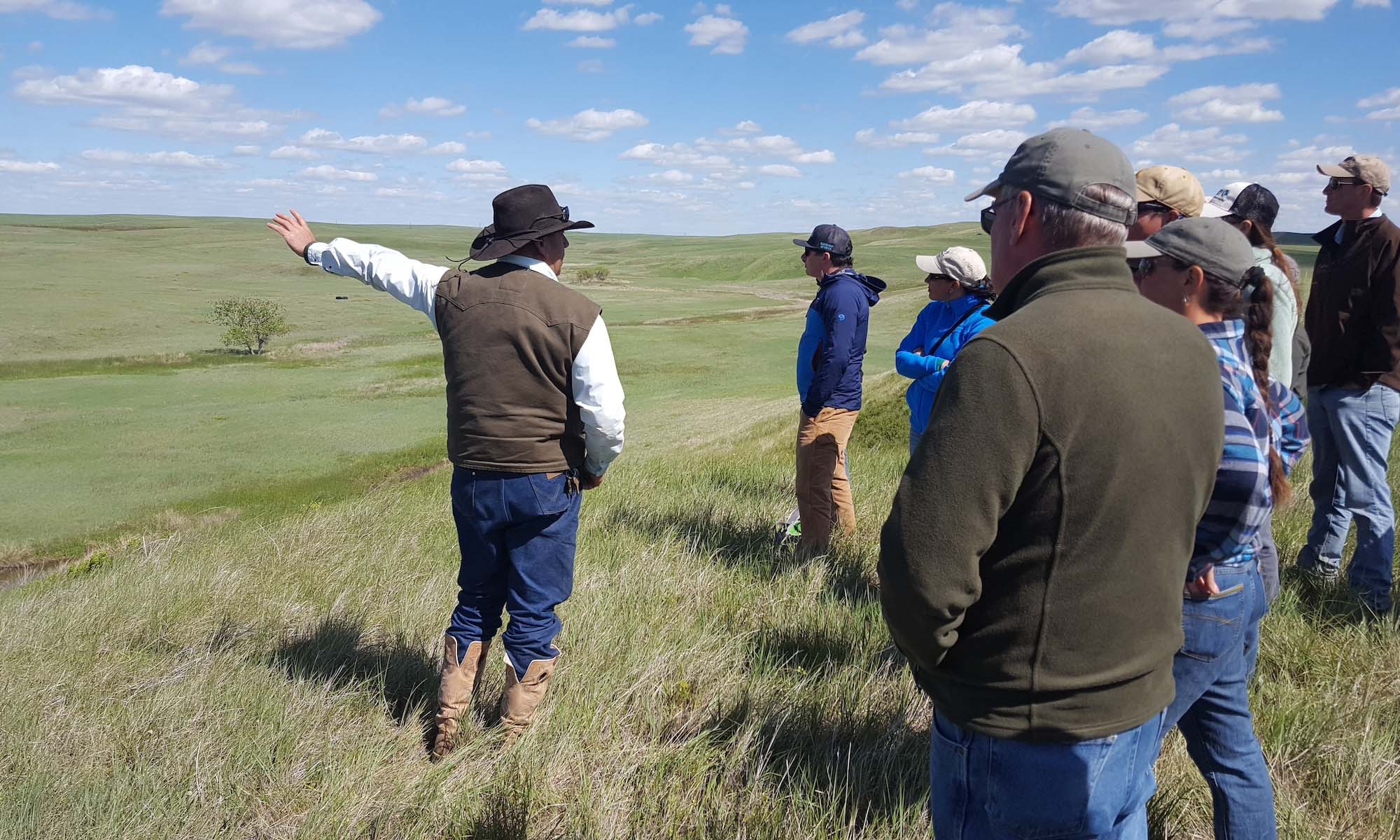
Participants at the 2022 Grassland Effectiveness Monitoring team workshop at Balcones Canyonlands National Wildlife Refuge.

Through educational workshops, outreach, training, and community assistance projects, JV8 and its partners will ensure the persistence and/or retention of 16.1 million acres of working, intact, and functional grasslands every year. These actions are in addition to direct habitat protection, restoration, or enhancement. This work includes sharing knowledge and culture, training and capacity building, and other forms of community support, such as technical and financial assistance programs or estate planning to ensure agricultural operations remain economically successful.

Examples of relevant practices include:

  • Alternative revenue stream planning, such as investments in agritourism or providing hunting leases.
  • Niche marketing activities like promoting bird-friendly beef.
  • Community Supported Agriculture programs, and Farm to Institution initiatives.
  • Indigenous-led bison rematriation.
  • Grassbank programs.
  • Promoting community-led conversations to support grasslands conservation.
Grassland monitoring west TX

Measuring Progress

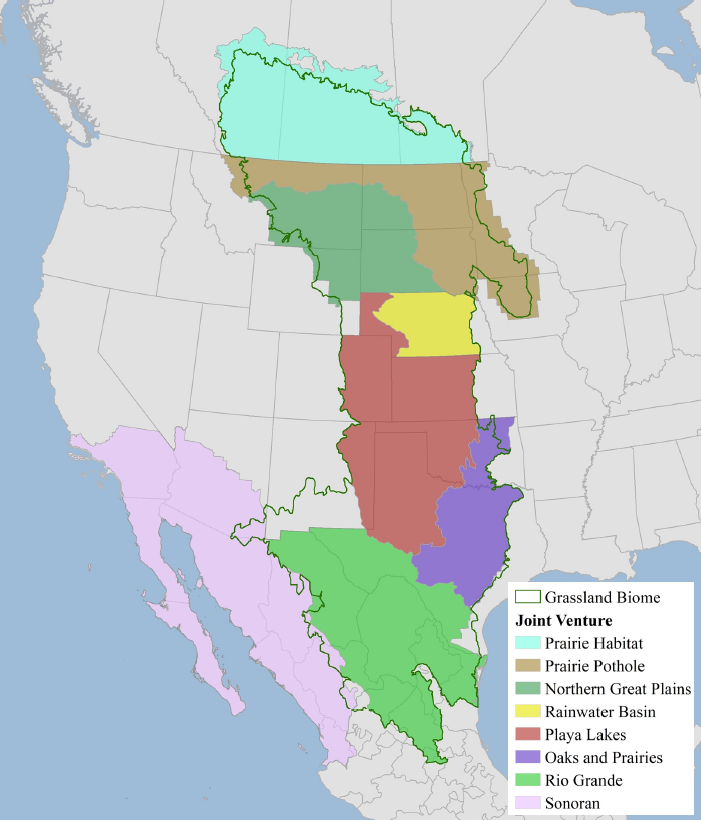
The JV8 Metrics Team is developing methods to track progress towards our goals for habitat protection, restoration, enhancement, and persistence/retention. In addition, we will use existing geospatial data to track grassland trends across the JV8 geography. Trends in habitat change will be monitored using World Wildlife Fund’s Plowprint, which tracks cropland conversion, and the Rangeland Analysis Platform, which can be used to track woody encroachment into grasslands. Trends in grassland bird populations will be tracked using results from the North American Breeding Bird Survey and the Integrated Monitoring in Bird Conservation Regions program.

Photo Credits
  • Sunset with the herd: Photo: Morgan Shorter
  • PHJV McIntyre Ranch: Photo: Ducks Unlimited Canada
  • Before & After Ceder Removal: Photo: R Lodge
  • RGJV-Bildo Saravia, RGJV Board member & owner of Rancho Las Yucas (shown) in Durango, MX with his grassland managers, partner of RGJV and Pronatura Noreste: Photo: R Rylander
  • PLJV Sunset with the herd: Photo: Morgan Shorter
  • McIntyre Ranch: Photo: Ducks Unlimited Canada
  • Prescribed fire: Photo: Derek Wiley
  • Grasslands: Photo: NGPJV
  • usfws-grassland-effectiveness-monitoring-workshop: Photo: Aubry Buzek/USFWS
  • Grassland monitoring west TX: Photo: Rebekah Rylander